


AN INTRODUCTION TO READING THE MYSTICS
The beginning of love is the will to let those we love be perfectly themselves, the resolution not to twist them to fit our own image.”
― Thomas Merton
We have made significant technology improvements on our Zoom call. Join us online on Mondays starting at 5pm!
There are many ways to know God.
You can be told about God by others. Perhaps someone shares with you the stories and songs of their faith. That is a good way to start.
You can read about God in sacred texts and theology books. That’s a great way to continue.
You can begin to call out to God, learning prayers and songs that resonate with your inner being. That is a necessary next step.
You can join a church and participate in the eucharist and other offerings of the congregation. Joining a community is a vital and fruitful move on the spiritual path.
There is also coming to know God by unmediated experience of God. That is, no middle man, no mediation. This is the mystical path. The mystics are people who know God by unmediated, intimate experience.
Schedule
September 14: Thomas Merton: Contemplation
September 21: Julian of Norwich: Julian's parable
September 28: No meeting - Fall Break
October 5: John of the Cross: Dark Night
October 12: Etty Hillesum: Etty’s trees
New Mystic:
October 19: St. Therese of Lisieux
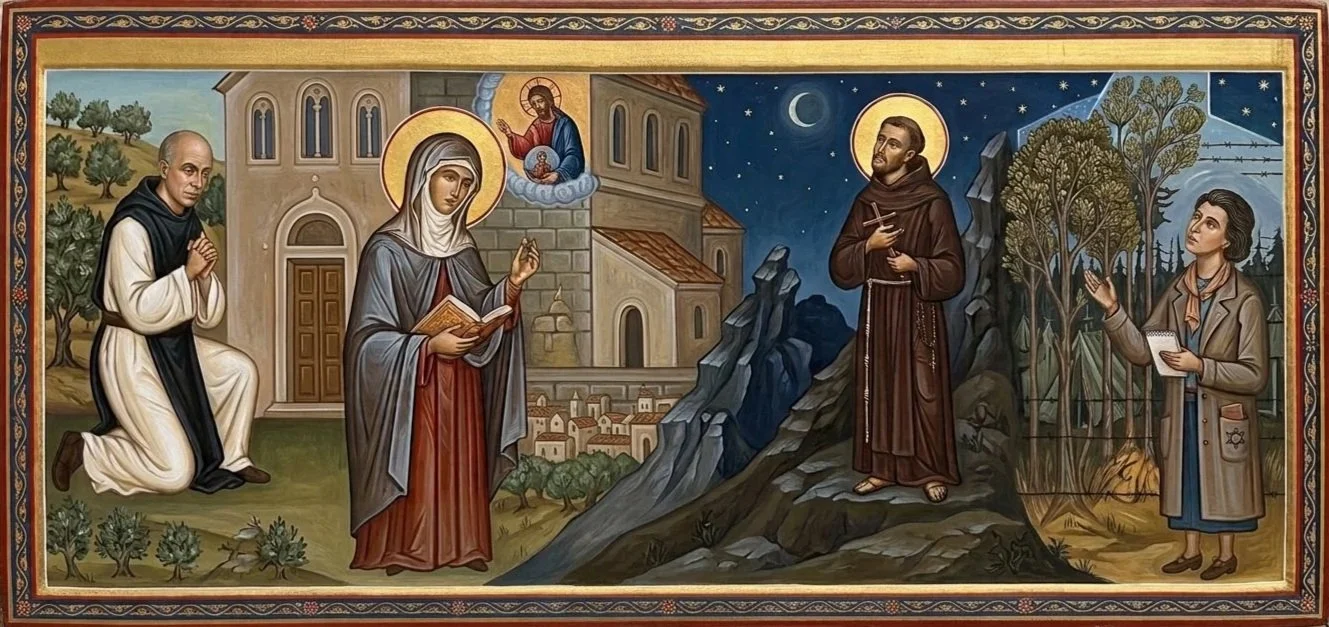
Thomas Merton, Julian of Norwich, John of the Cross, and Etty Hillesum
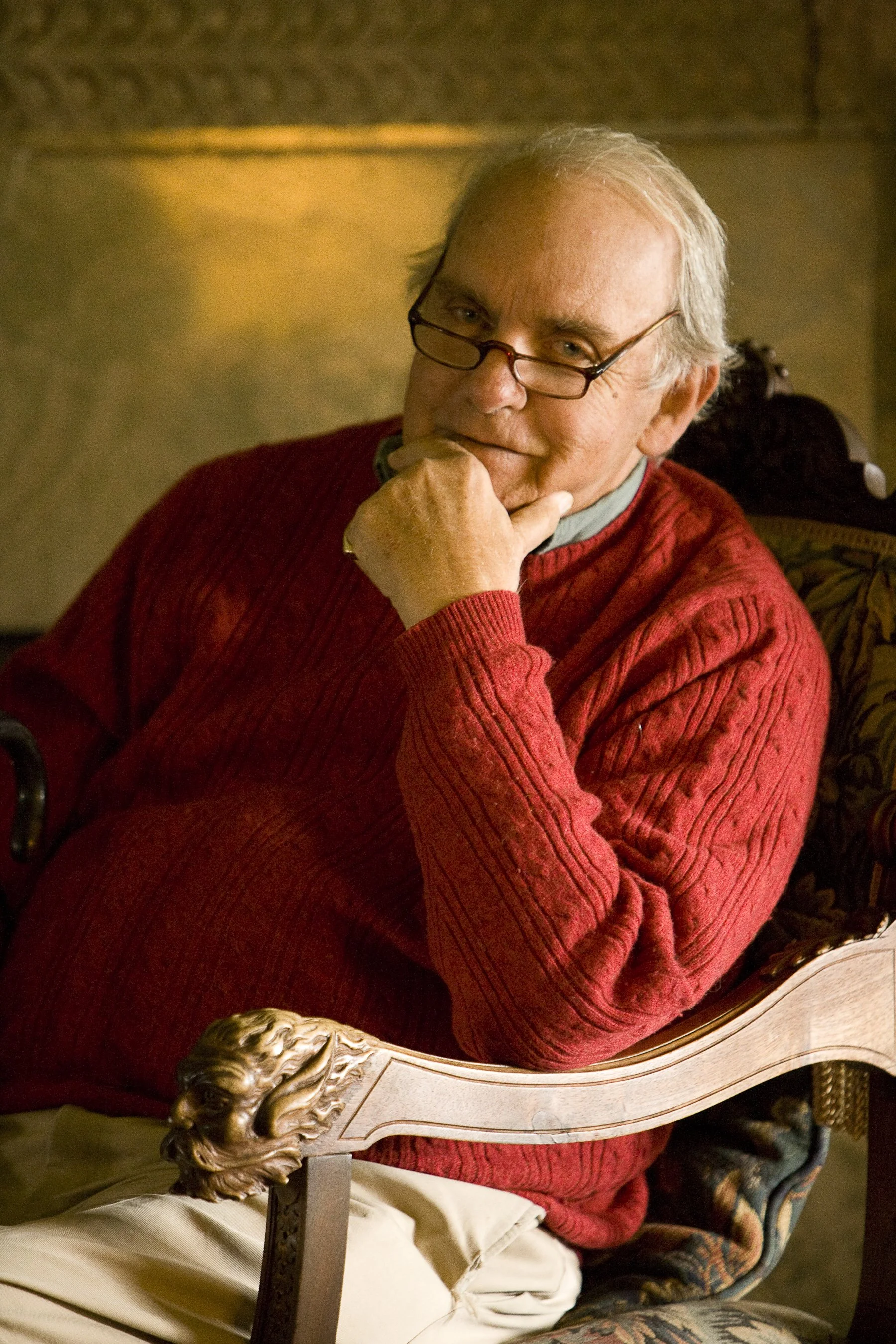
“There must be a God because every age and culture has produced mystics who have experienced a Reality beyond reality and have come back using different words and images but obviously and without collusion describing with awed adoration the same Indescribability.”
-Frederick Buechner

“The mystic is not somebody who says, “Look what I’ve experienced. Look what I’ve achieved.” The mystic is the one who says, “Look what love has done to me.” . . . There’s nothing left, but the being of love itself giving itself away as . . . the concreteness of who you simply are.”
-James Finley
Session Notes
Frequently Asked Questions
-
You don’t have to be a mystic or be attracted to the mystics in any way to belong to and be loved by God, to go to heaven, to follow Jesus, to be a good person, to know and feel that Love is all, or to live a rich and meaningful life. The mystics are not for everyone.
The depth you long for and wonder about is God. A thread of God’s benevolent presence runs through all things and every moment. This thread is divine being, infinite love, which sources and sustains all life. We, Christians, know this divine love by a particular name in a particular, incarnate person, Jesus Christ.
The mystics of the Judeo-Christian tradition have encountered God in a way that transcends ordinary experience. Quite often this happens to them through the portal of ordinary experience. It is as if they drop through the bottom of or burst out of the top of their everyday lives and are swept away by God in a revelation of transcendent love. Some have been given the gift of being able to write and talk about mystical experiences of God. These are people like Teresa of Avila, John of the Cross, and Thomas Merton whose works we read.
But if you’ve found yourself at this juncture in life wondering about and reading about the mystics and wanting to learn more, then they might just be for you. You likely have an inner itch that won’t leave you alone. That itch is a buried sense that there is something more to life than that which you find and experience on the surface. Not that there’s anything wrong with surface level living; there’s not. It’s just that you have an intuition that there is a deeper depth to everything and everybody and you want to get down into that depth. Therefore, you’ve landed in the company of the mystics.
-
Reading the mystics is a prayerful spiritual practice. We don’t read the mystics quickly or efficiently or in order to get to the end of the book. Nor do we read the mystics seeking understanding.
We read the mystics that we might be pointed to the deeper depth as it can be found in our own lives.
We read the mystics slowly.
We read the mystics as a spiritual practice; reading them a little bit at a time on a regular basis over the course of a lifetime.
We let the mystics be citizens of their own context in history without demanding that they adopt our context or complaining about their way of putting things.
Look for the mystic that best suits you as a teacher given your life context and how their style matches up with your personality.
We pause frequently when we read the mystics to ponder and wonder about what we’ve just read. We circle or underline difficult words or phrases. We mark up our books with exclamation points, smiley faces, and check marks when we happen upon something particularly meaningful or illuminating or confusing.
We allow the mystics to point us back to our own lives that their teaching might help us see God’s presence and activity with and in us.
We don’t worry about that which we don’t understand in the teaching of the mystics. We may never understand any of it. Or we may grow to learn from the teachings of time. You’ll know you’ve found your groove when you simply enjoy the conversation with no need to get anything out of it. This is how the mystics show us the path to God. It is often referred to as a knowing that is unknowing.
-
It’s helpful to know that the mystics we read share some assumptions:
The fullness of God dwells within you
On the contemplative path God may wean you off of ordinary consolations
Silent prayer is an important part of one’s discipline of spiritual practice
Humility and self-reflection are crucial to our relationships with God and each other
The most important thing for a Christian is to have a sincere desire that God’s will and your will be united and that God’s will be done
Your “nothingness without God” is evidence of your finite being as the presence of God, who is infinite love, loving you into being moment to moment.
-
In the contemplative church we are cultivating an environment in which:
The mystics are taught and read
Silent prayer (Christian meditation) groups are present
The false self can be dismantled as a gift from God
The true self can be realized as a gift from God
The depths of Self can be plumbed
Transforming union and contemplation can be received as gifts